
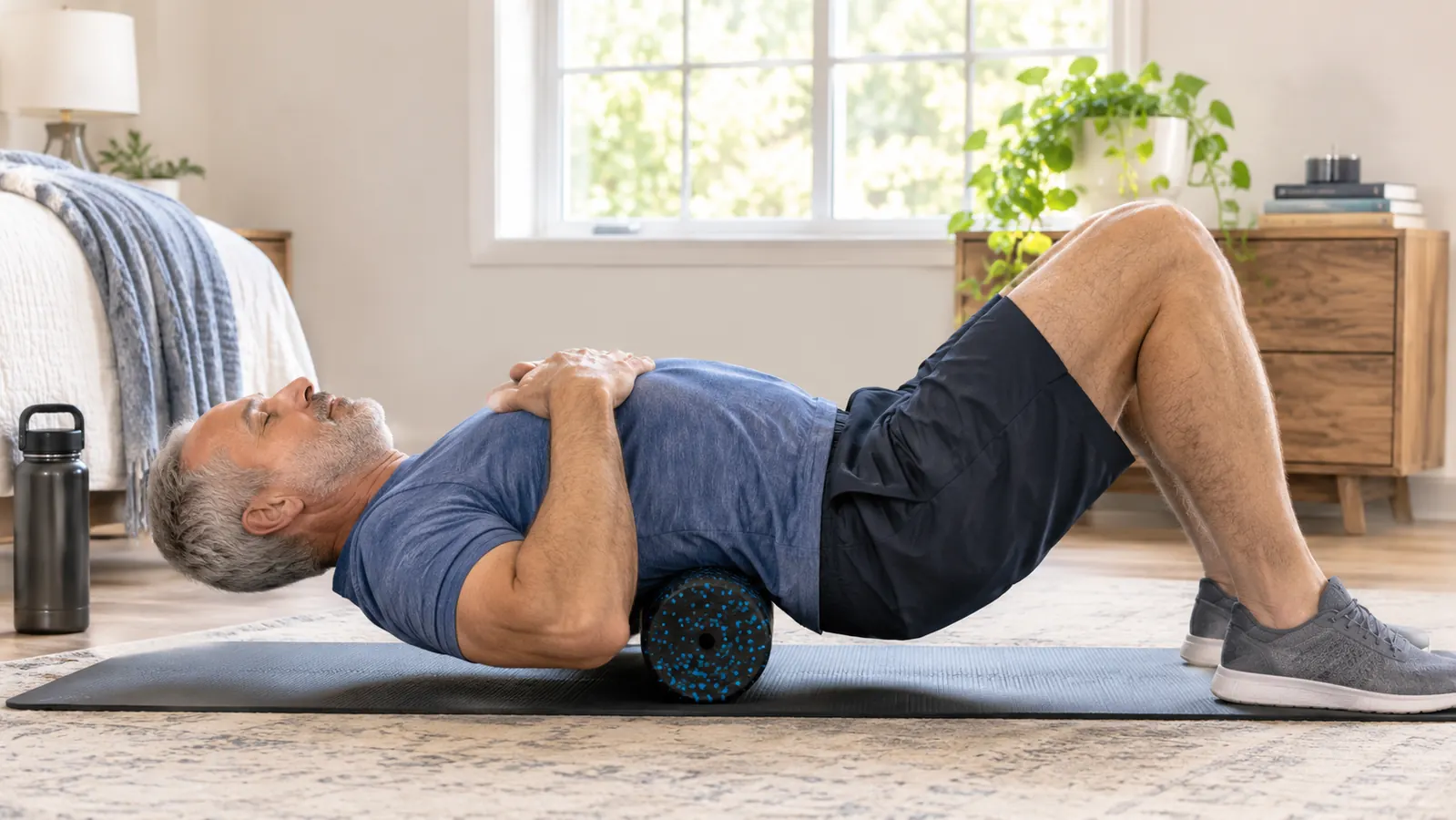
If your lower back talks to you after 18 holes the way mine does, you have probably stood in the foam roller aisle wondering what the difference actually is. I am Gary, 61, a retired HVAC contractor in Mesa, Arizona. I play a Tuesday league round and a Saturday round with friends most weeks, I carry a 16 handicap, and I walk nine holes and ride eighteen. My lower back has been stiff and sore on the right side since a cold-morning round when I was 58. My doctor called it muscular strain. No surgery, no disc injury. Just a back that needs attention before and after I play. After a season of going back and forth between a plain smooth roller and the TriggerPoint GRID foam roller, I can tell you the difference matters.
That cold morning was a Tuesday in late November. I skipped my usual warm-up because the course was empty and I wanted to get moving, and by the 14th hole I could feel the right side of my lower back complaining with every swing. For a few weeks after that I borrowed a plain smooth foam roller from a neighbor. It helped some, but I kept having to stop and reposition it to get at the exact spot that hurt. The roller was longer than I needed, and on a carpeted floor it wanted to roll away from under my back unless I held it with both hands. I tried putting a towel under it and I tried wedging it against the baseboard. Neither worked well. I tried using it on the hard floor of the garage instead, and that was worse. Then a Tuesday league friend named Ron recommended the TriggerPoint GRID on the course one day, and I ordered my own that week. I spent the better part of a season going back and forth between the two. The short answer is that I reach for the TriggerPoint GRID almost every time now. It is not because the smooth roller is bad. It is because the GRID does a different job, and for a golfer with a cranky lower back, that job matters.
| TriggerPoint GRID | Smooth Foam Roller | |
|---|---|---|
| Surface | Multi-density GRID pattern with ridges and nodules that mimic a massage | One even, smooth surface from end to end |
| Firmness | Extra firm, with softer Distrodensity Zones for tender spots | Medium-firm all the way through |
| Length | 13 inches, easy to position under one part of the back at a time | Usually 24 to 36 inches, covering more of the spine at once |
| Weight | 1.1 pounds, easy to carry from the spare room to the garage | Heavier, typically 2 to 3 pounds, stays put once you set it down |
| Pressure control | You control depth with body weight, and the ridges find the knot | Even pressure across a wide area, less precise on one spot |
| Best for | Targeting a specific sore spot like the right side of the lower back | Broad, gentle work along the whole back |
Where the TriggerPoint GRID Wins
The GRID's whole idea is that different densities do different things. The raised ridges and nodules press into muscle the way a therapist's thumb or knuckle would, while the softer zones let you work a tender area without flinching. The listing calls it a multi-density GRID with a three-dimensional surface for muscle recovery, and the rolling experience is meant to replicate the feeling of a massage. I can tell you this: a plain smooth roller just pushes evenly across everything. The GRID finds the knot and works on it.
The first time I really noticed the difference was a Saturday in January. I had spent the day before on the couch watching NFL football, the same way I do most Sundays, and my whole right side had that dull, tight feeling by the time I stood up. I put the TriggerPoint GRID on the spare bedroom carpet, lay down with it under my lumbar area, and let my body weight sink in. The ridges found the sore spot on the first pass. Ten minutes later I stood up and the tightness had loosened enough that Karen noticed I was not moving like I was bracing for something. That is the part the smooth roller never did for me. It felt pleasant, but it did not find the spot.
I also like the numbers on this thing. It is 13 inches long, which is short enough that I can position it exactly under my lumbar area without the ends digging into my shoulder blades or pelvis. It weighs 1.1 pounds, so it is easy to carry from the spare room to the garage when I want to loosen up before swinging at the hitting net. I have also thrown it in the trunk for the ride home after a Tuesday round, when the stiffness tends to set in during the drive. The firmness is listed as extra firm, and it is honest about that. The Distrodensity Zones are the softer parts, and they are where I start when the muscle is already tender. The material is foam and it is chemical free, which mattered to me because I am the kind of person who reads the label before I put something on the floor of my stretching room.
One thing I learned the hard way: you do not need to press hard. The first time I used the GRID I pushed down with my hands and it hurt. Then I realized the trick is to use your body weight and let the roller do the work. I lie on the floor, bend my knees, and slowly shift my weight across the ridges. On a tight morning I start on the softer Distrodensity Zones for a minute, then move onto the firmer ridges. That progression is the difference between a useful session and a wince-and-quit session.
The Tuesday league round that convinced me was in February. I had woken up with the right side tight, the kind of morning where I usually start planning which holes I can play without making it worse. Instead I spent twelve minutes on the GRID before I left the house, focusing on that one spot. I walked the front nine that day and I did not feel the usual grab on my first swing of each hole. That had not happened since before the flare-up. It was not a cure, and I am not saying it was. But it made the round comfortable, and comfortable rounds are what I am after at 61.

Where the Smooth Foam Roller Wins
The neighbor's roller was a plain smooth roller, maybe 36 inches long and medium firm all the way through. It felt good in the moment, but it never seemed to change anything. The problem was that a smooth surface spreads pressure evenly, and my problem was not even. It was one spot on the right side of my lower back, about the size of my palm. I would roll for ten minutes and the spot would still be there when I stood up. That is what finally made me listen when Ron brought up the TriggerPoint GRID.
I am not going to pretend the smooth roller has no place. It does. A longer smooth roller spreads pressure across a wide area, which is exactly what you want when your whole back feels tight rather than one specific spot. On Sundays after my round, when I have been on the couch watching NFL football and my entire back has tightened up, the smooth roller gives me a broad, even release that the GRID does not try to do. It is also easier to use on the neck and upper back. The GRID's ridges can feel like a lot on the bony parts of the upper spine, but the smooth surface just glides.
The smooth roller is also more forgiving for someone who is new to rolling. The TriggerPoint GRID's extra-firm surface is honest about what it is doing, and if you are not used to that kind of pressure, you may find yourself avoiding the very spots that need work. I saw that happen with a buddy who tried mine at the course. He rolled for about thirty seconds, said it was too much, and handed it back. The smooth roller lets you ease in. You can use your body weight gradually and build up tolerance over a couple of weeks, and for a person who has never rolled before, that gentle start is the difference between a new habit and a one-time experiment.
There is also the length. The smooth roller I borrowed was a good 36 inches, and when I wanted to work my whole spine in one pass, I could lie across it and roll from my neck down to my tailbone without stopping. The TriggerPoint GRID is 13 inches, which is better for targeting but means you move it and reposition it if you want full-spine coverage. On a day when I am sore everywhere, that extra length saves me time. I will also say the smooth roller does not demand anything from you. You just lie on it and breathe. Some mornings that is exactly the right amount of thinking.
Where the smooth roller really earns its keep for me is the legs. After a Saturday round I will use the smooth roller on my calves and hamstrings, where there are no bony spots and the even pressure feels right. The GRID works there too, but the ridges can be a lot on a calf that is already crampy from walking the front nine. So my routine is not either-or. It is both, for different parts of the week. If I had to give one up, I would keep the GRID, but I would not enjoy giving up the smooth roller on leg days.
So I still keep a smooth roller in the house for those whole-back days. If I am being honest, the smooth roller is the one I would hand to someone who has never rolled before, and it is the one I reach for when I am sore everywhere instead of in one place. The tradeoff is precision. For the lower back issue that actually sent me looking for help, the TriggerPoint GRID does more in less time.
The smooth roller feels fine. The TriggerPoint GRID actually changes how my back feels when I stand up.
The roller that actually finds the knot
The TriggerPoint GRID's multi-density surface is the reason I reach for it over the smooth roller on stiff mornings. If you have one specific spot that bothers you after a round, this is the one to try.
Amazon Check Today's Price on Amazon →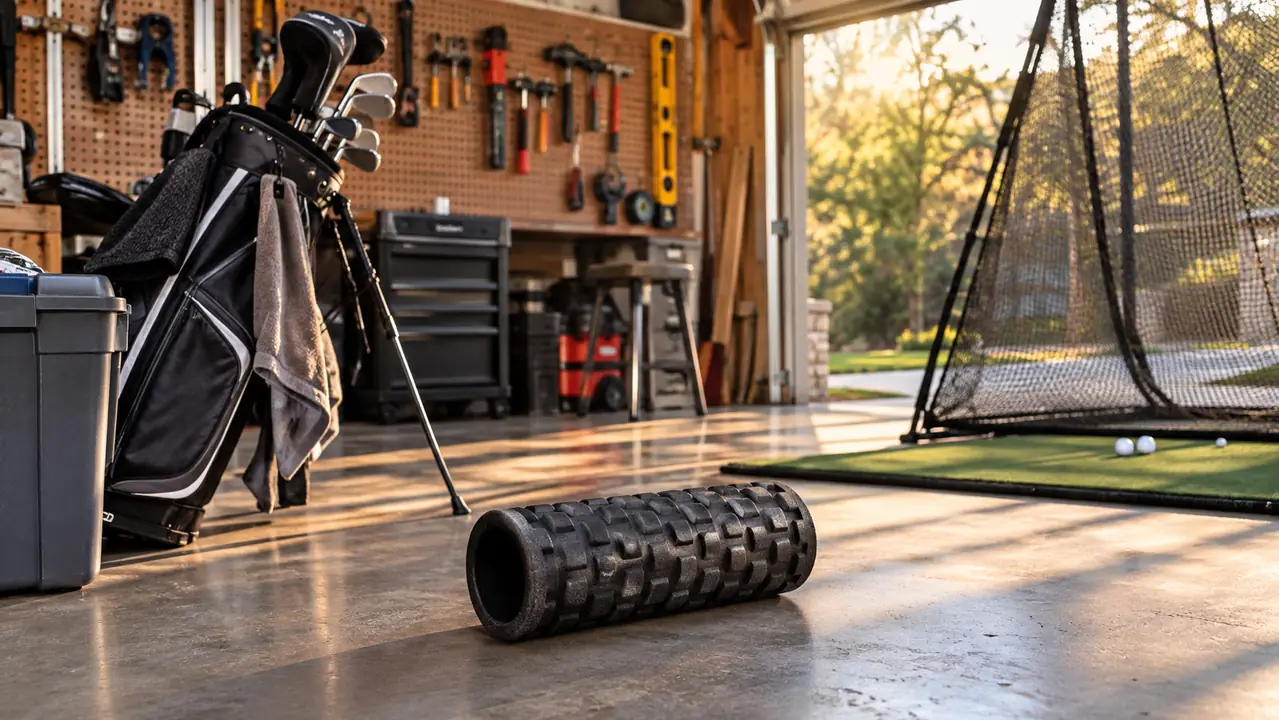
Who Should Buy Which
Buy the TriggerPoint GRID if you have a specific area that bothers you, the way my right lower back does after a Tuesday league round. Buy it if you want a roller that feels like targeted work instead of a general stretch. Buy it if you are willing to spend a few minutes finding the right spot and letting the ridges do their job. The extra-firm feel is not a problem once you learn to use your body weight to control pressure. Start with the softer Distrodensity Zones on a tender morning, then work into the firmer ridges as you loosen up.
Buy a smooth foam roller if you are just starting out and want something gentle, or if your tightness is spread across your whole back and you want broad pressure. Buy it if you want something longer to lie on, or if you know you will not use a textured roller consistently because it feels like too much. There is no shame in that. The best recovery tool is the one you actually use, and a smooth roller you use every day beats a textured roller you leave in the closet.
If you are still deciding, here is what I would do. Try the TriggerPoint GRID first, because it is the one that targets. If the pressure is too much on your first session, put it aside for a week and start with a smooth roller to get used to the idea of rolling. Then come back to the GRID and let your body weight do the work. That is exactly how I would have done it if Ron had explained it to me before I bought mine. The GRID is the one that sits in my stretching room now, and the smooth roller lives in the garage for the days when everything is tight. Two tools, two jobs, and knowing which one you need on a given morning is half the battle.
One more thing. If you are in your fifties and your back has just started to complain, do not do what I did. Do not spend a season playing through stiffness and hoping it sorts itself out. Get a roller, learn to use it, and use it on the days you feel fine, not just the days you hurt. The TriggerPoint GRID is the tool I wish I had bought the week after that cold morning instead of the month after. It would have saved me a lot of uncomfortable rounds.
Start with the one that targets
If you are still deciding, my advice is to try the TriggerPoint GRID first. If it feels like too much, a smooth roller will always be there as the gentler backup.
Amazon Check Today's Price on Amazon →