
The 16th hole at my home course, Tuesday league night, and I am bent over picking up my ball marker when I feel that familiar grab on the right side of my lower back. The kind of grab that makes you stand there a second with your hand on your hip, hoping it is just stiffness and not the start of another month of playing through it.
I'm Gary, 61, a retired HVAC contractor in Mesa, Arizona, and my lower back has been my weak spot since I was 58, when a cold-morning round left me with a muscular strain that took weeks to settle. Since then I have tried a lot of things: morning stretching in the spare bedroom, a heating pad on the couch, changing my setup at address. About four months ago I added the Sparthos Back Brace to the routine, and it has earned a permanent spot in my golf bag. Here is what months of real use on the course look like.
The Quick Verdict
A lightweight, breathable lumbar support belt that takes the edge off the stiffness that used to show up around hole 15. It will not fix a bad back, but it has become the piece of gear I reach for before every league round.
Amazon Check Today's Price →The brace I keep in my bag for every Tuesday and Saturday round
After months of use, the Sparthos Back Brace is the one piece of gear I will not leave home without. It is adjustable, breathable, and light enough that I forget I am wearing it by the second hole.
Amazon Check Today's Price on Amazon →How I've Used It
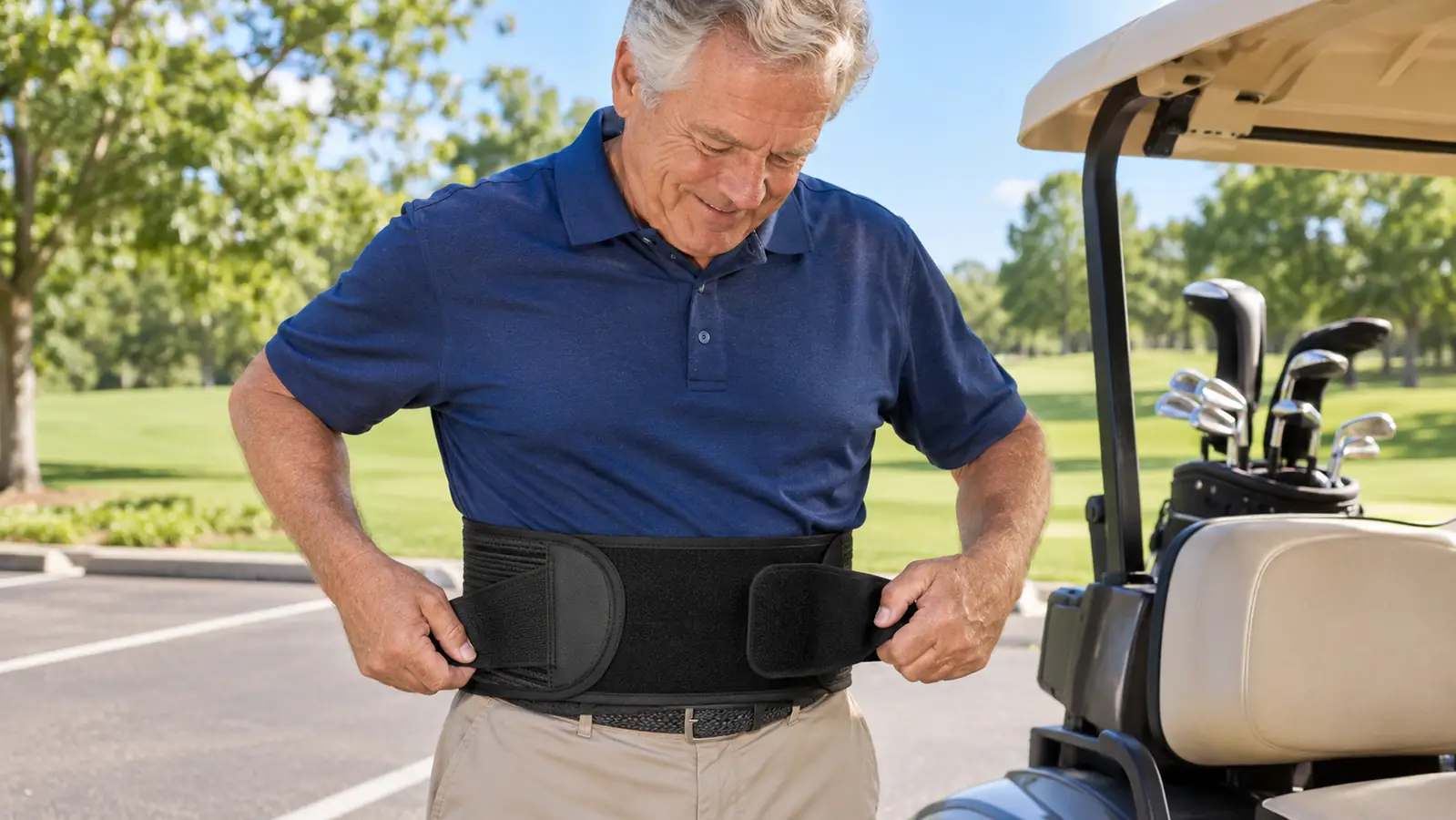
I wear the Sparthos Back Brace for golf more than anything else. On Tuesday league nights I put it on in the parking lot about fifteen minutes before the first tee, snug but not cranked down, and I keep it on through the front nine. On Saturdays with my regular group I wear it for the full 18, mostly because we walk the front and ride the back, and that walk is where my back used to start complaining.
The brace is a belt with a removable lumbar pad and a hook and loop closure, which means I can adjust it between holes without taking it off. It weighs 0.37 kg, light enough that I forget it is there. I have also used it for a few hours of yard work and a handful of weightlifting sessions, since the listing says it is made for golf, running, and weightlifting. It does the same job in all three: it gives my lower back something to work against.
One thing I will say up front: I am not a doctor or a physical therapist. My doctor diagnosed my issue as muscular strain, not a disc problem. I use the brace for support during activity, not as treatment. If your pain is sharp, radiating down a leg, or new, that is a conversation for your doctor, not a product review.
What I Tried Before
Before the Sparthos brace, my approach to back stiffness was mostly reactive. I would finish a round, feel the grab on the right side, and spend Sunday on the couch with a heating pad while watching football, stiffening up a little more with every quarter. I tried a cheap elastic wrap from the pharmacy, but it rolled up every time I bent over to tee a ball, and I gave up on it after two rounds.
I also tried changing my routine instead of adding gear. More stretching in the morning, a shorter backswing, a slower tempo. Some of that helped, especially the stretching. But I still had rounds where the stiffness showed up by the back nine, and that is what pushed me toward a proper lumbar support belt. I wanted something I could wear during the round, not just recover from after it.
The other thing I tried was just playing through it, which I do not recommend. There were weeks in that first season after the strain where I would finish a round stiff, spend the evening on the couch, and feel okay by Monday. Then the next round would start the whole cycle again. It took me a while to understand that the stiffness was my back telling me it needed support, not something to tough out.
What the Sparthos Back Brace Actually Does
The Sparthos Back Brace is built from nylon, plastic, and polyester, and the design is straightforward: a belt that wraps around your waist with a removable lumbar pad that sits against the curve of your lower back. The pad is firm without being hard, and it gives your spine a reference point during the swing. That is the part that matters for golf, because the lower back does a lot of rotating in a swing, and a little support goes a long way.
The specs list it as adjustable, breathable, lightweight, and stretchable, and those four words describe exactly what I have found. The stretchable material moves with you instead of fighting you. The breathable fabric matters more than you would think in Mesa, where I am often teeing off in 95-degree afternoon heat. And at 0.37 kg, it is not the kind of brace you notice in a bad way.
It is not a rigid medical brace. It is a support belt. The difference matters: a rigid brace stops you from moving, while this supports you while you move. For a golf swing, you want the support without the restriction, and that is the balance the Sparthos brace gets right.
The hook and loop closure is worth a mention on its own. Some support belts use buckles or straps that dig in when you bend. The Sparthos brace uses a hook and loop closure, and I can tighten it a quarter inch between holes without taking it off. That is exactly what you want in the middle of a round.
Wearing It on the Course
The first time I wore it, I was skeptical. I expected something bulky that would bunch up under my polo and mess with my turn. Instead, I forgot it was there by the second hole. The hook and loop closure lets me fine-tune the fit, and because it is a belt rather than a full wrap, it does not interfere with my swing.
The real test came around hole 15. That is where I used to feel the grab, that familiar stiffness on the right side that made me stand up straighter on every putt and take shorter swings on the last few holes. With the brace on, I have played full rounds where that stiffness just did not build up the way it used to. It is not that the brace fixed anything. It is that the support kept my lower back from working as hard to hold my posture, so the muscles did not fatigue the same way.
I have also learned how to wear it. Too loose and it can roll or bunch when you bend. Too tight and it gets uncomfortable by the back nine. The sweet spot is snug enough that the lumbar pad stays put against your lower back, but loose enough that you can breathe and rotate. It took me a round or two to find that, and now I adjust it once in the parking lot and once between nines.
I will be specific about what changed. Before the brace, my Saturday group would notice me standing up straighter on the last few holes, taking shorter practice swings, and favoring my right side when I bent to pick up my ball. After a few weeks with the brace, one of the guys asked what I had changed, because I was not doing the little wince-and-stretch routine anymore. That was the moment I realized the brace was doing more than I had given it credit for.
Fit, Feel, and Everyday Use
I wear a medium, and the hook and loop closure gives a generous adjustment range, so I can get it snug over a thin shirt or loosen it a notch when I am riding in the cart. I have worn it over a t-shirt and directly against my skin under a polo. Both work. Directly against the skin stays put a little better, but over a shirt is more comfortable in the heat.
The removable lumbar pad is a nice feature. I keep it in for full rounds and yard work, and I take it out for lighter days when I just want a little support without the extra firmness. It comes out in seconds and goes back in just as easily.
For care, I hand wash it and let it air dry. After months of use, twice a week in the Arizona heat, it still looks and works the way it did the first week. No fraying, no stretched-out elastic, no broken hook and loop. That has been the biggest surprise, honestly. I expected a support belt like this to wear out after a season.
The medium fits my waist, and sizing is the one thing worth getting right before you order. The hook and loop closure has a lot of adjustment range, so there is some forgiveness, but a belt that is too big will bunch when you sit in a cart and a belt that is too small will dig in when you rotate. I checked the sizing guide against my waist measurement and it landed exactly right.
What It Won't Do
Let me be honest about the limits. The Sparthos Back Brace will not fix the underlying problem. I still stretch every morning in the spare bedroom. I still do the core work my doctor suggested. The brace is support, not a cure, and I think the people who get the most out of it are the ones who treat it that way.
The listing reads like it was written for every back problem under the sun, and I would not read too much into that. I can only speak to my own situation, which my doctor called muscular strain. If you have been told you have something more serious, or you are not sure what is going on back there, talk to your doctor before you buy. A brace can be a helpful part of a plan, but it is not a substitute for a diagnosis.
It also will not make your swing better. My handicap is still 16. The brace makes the round more comfortable, and a comfortable round is a better round, but it is not going to fix a slice or add ten yards. If that is what you are hoping for, save your money.
What I Liked
- Lightweight at 0.37 kg, easy to forget you are wearing it
- Breathable fabric that holds up in hot conditions
- Adjustable hook and loop closure for a custom fit
- Removable lumbar pad adds firmness when you need it
- Made for golf, running, and weightlifting
- Has held up well after months of weekly use
Where It Falls Short
- Can roll or bunch if you wear it too loose
- Not a substitute for medical treatment
- Takes a round or two to find the right snugness
- You will still need to do the stretching and core work
By hole 15, I used to be reaching for my lower back after every putt. With the Sparthos brace, I have played full rounds where I completely forgot it was on.
Who This Is For
The Sparthos Back Brace is for golfers who stiffen up late in a round, the way I did. If you are fine on the first tee and struggling by the back nine, this is the kind of support that can carry you through. It is also for people who want lower back support during other activities, since it is made for golf, running, and weightlifting.
It is for people who want support without a rigid medical brace. If you need something that lets you move while taking the edge off, this belt does that. And it is for people who will treat it as one tool in a bigger plan, alongside stretching and strengthening, rather than expecting a belt to do all the work.
Who Should Skip It
Skip it if your pain is sharp, radiating, or new. That is not a product problem, it is a doctor problem, and I would say the same thing in person. Skip it if you need a rigid, immobilizing brace, because this is a support belt, not a medical immobilizer. And skip it if you are hoping a brace will replace stretching, strengthening, and good swing mechanics, because it will not.
I will also say this: if you are between sizes, pay attention to the sizing guide. I wear a medium and it fits well, but a brace that is too big will roll and a brace that is too small will dig in. Get the fit right and this is a genuinely useful tool. Get it wrong and you will blame the product for something that is really a sizing problem.
Months in, it is still in my bag
The Sparthos Back Brace is the piece of gear I reach for before every league round. If you stiffen up by the back nine the way I did, it is worth a look.
Amazon Check Today's Price on Amazon →