
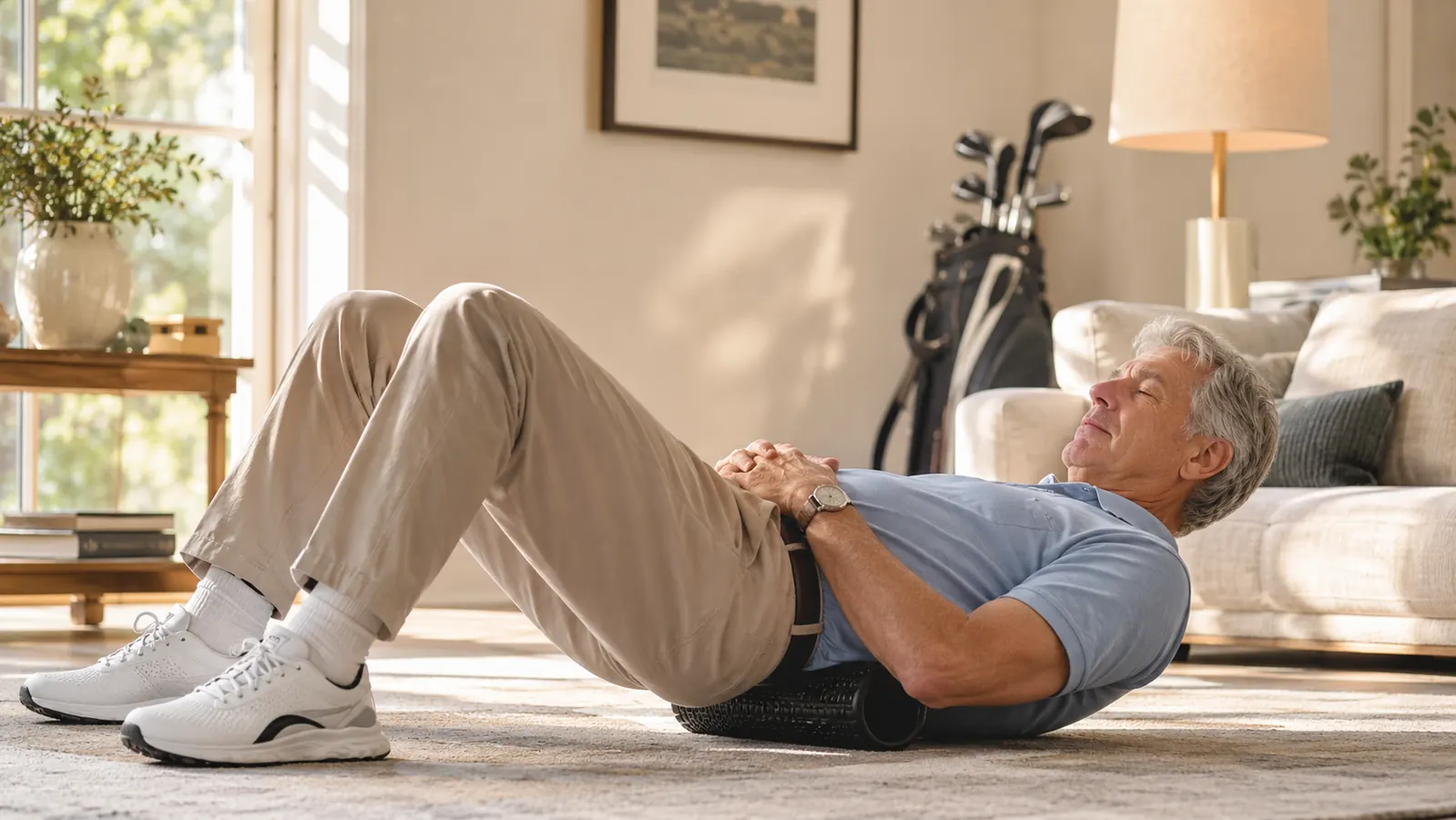
I am Gary Lindqvist, 61, a retired HVAC contractor in Mesa, Arizona. I play a Tuesday league round and a Saturday round with friends, I carry a 16 handicap, and for the last few years my lower back has been the thing I think about most on the course. It started at 58 after a cold-morning round, a dull soreness on the right side that my doctor called muscular strain. Some weeks I played through it. Some weeks I skipped the back nine and sat in the clubhouse feeling sorry for myself.
A Tuesday league friend named Ron told me about the TriggerPoint GRID foam roller one afternoon on the tee box. He said it helped his hamstrings and his lower back more than anything he had tried. I ordered my own that week, and it showed up two days later. The first time I used it, on the living room floor, I knew within five minutes that it was different from anything I had tried before.
The Quick Verdict
The TriggerPoint GRID is the most useful recovery tool I own. It is firm enough to actually work, the multi-density surface feels like a massage, and after six months it still looks and rolls like new.
Amazon Check Today's Price →The foam roller that finally made my lower back feel loose before a round
The TriggerPoint GRID is a 13-inch multi-density foam roller built for deep tissue work on the whole body. If you wake up stiff on Saturday morning and want to feel human before the first tee, this is the one I reach for.
Amazon Check Today's Price on Amazon →How I've Used It
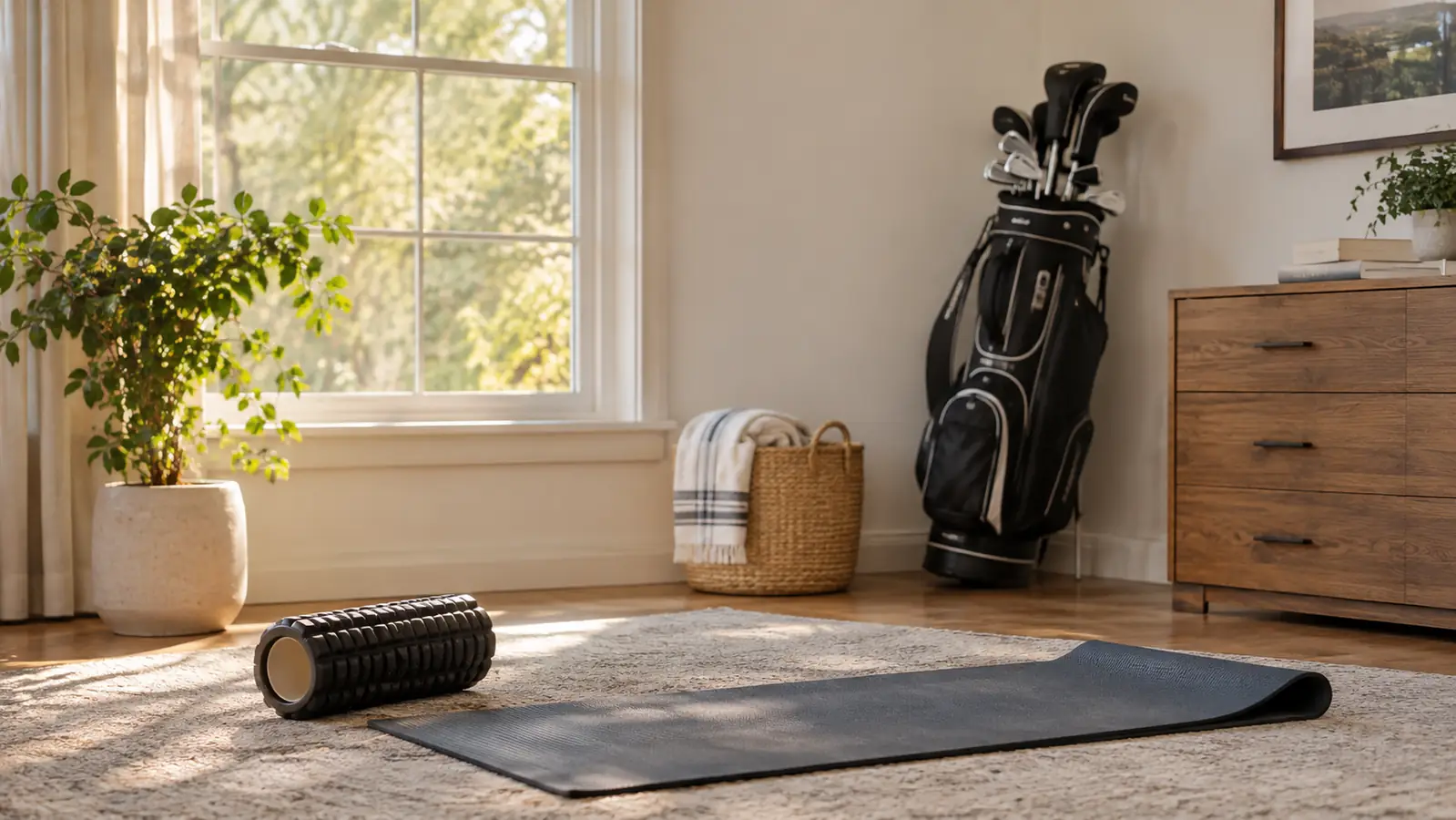
I keep the TriggerPoint GRID in the spare bedroom I use for stretching, next to the door so I have to step over it to get to the hitting net in the garage. Most weeks I use it four or five times: once in the morning before a league round, once on Sunday night after sitting through NFL games, and a few times midweek when my right side starts talking to me.
My routine is not fancy. I sit on the floor with the roller under my thighs and roll slowly down to my knees and back, about ten passes. Then I turn over and do the same thing with my hamstrings. Then I put the roller under my lower back, just above the belt line, and roll side to side in small movements. Ten minutes total, maybe fifteen if I am stiff. I do the same thing after a round when I get home, before I sit down on the couch.
The 13-inch length matters more than I expected. It is short enough to fit in the spare bedroom and easy to move around, but long enough that I get a full pass on my thighs and hamstrings without repositioning a dozen times. The item weight is 1.1 pounds, so I can carry it out to the garage or into the living room without thinking about it.
Before the GRID, I tried other things that did not do the job. I had a smooth foam roller from a big box store, the soft kind, and it felt like lying on a pool noodle. It never hurt, which is another way of saying it never helped. I also tried a tennis ball under my glutes, and that was too sharp and too small, it only hit one spot. And I have a heating pad that Karen gave me for Christmas a couple of years ago. It helps me relax, but it does not get into the muscle the way direct pressure does. The GRID was the first thing that felt like it was actually reaching the tight band on my right side.
One Tuesday in February shows what I mean. It was a cold morning, 48 degrees, and I woke up stiffer than usual. I rolled for twelve minutes before I left, longer than my normal ten, and spent extra time on the spot just above my belt line on the right. I shot a 92 that day and never once thought about my back. The Tuesday before, I had skipped rolling because I was running late, and I spent the first five holes feeling like a board, favoring my right side on every swing. Same course, same week, same me. The only difference was ten minutes on the floor.
The Multi-Density Surface Is the Whole Story
The reason I picked the TriggerPoint GRID over a plain smooth foam roller is the surface. It has a three-dimensional pattern of varying ridges and nodules, and the company calls the zones Distrodensity Zones. That sounds like marketing talk until you feel it. The harder ridges dig into tight muscle, and the softer areas in between let you keep rolling without that sharp, bruising feeling you get on a cheap roller.
The firmness description is Extra Firm, and that is accurate. It is not soft like the cheap rollers. The first time I used it on my hamstrings, I winced. But that is exactly what I needed. My doctor told me my lower back stiffness was muscular, and the only thing that helped was pressure on the muscle. The GRID delivers that pressure without feeling like I am lying on a piece of pipe.
The material is a chemical-free foam, and the product is made for whole body use. I have used it on my calves, my hamstrings, my glutes, my lower back, and my shoulders after carrying my bag on a hot Saturday walk. It works everywhere. The surface has not flattened, cracked, or lost its firmness after months of regular use.
The first few sessions were not comfortable, and I want to be honest about that. The ridges on a fresh GRID are aggressive, and my hamstrings had not been asked to do anything like this in years. I could only manage a few passes at first, and my legs were sore the next day in a way that felt like I had actually exercised them. That is the difference between this roller and the soft one. The soft one never made me sore because it never did anything. The GRID made me sore because it was working. After about two weeks, the soreness went away and the looseness stayed.
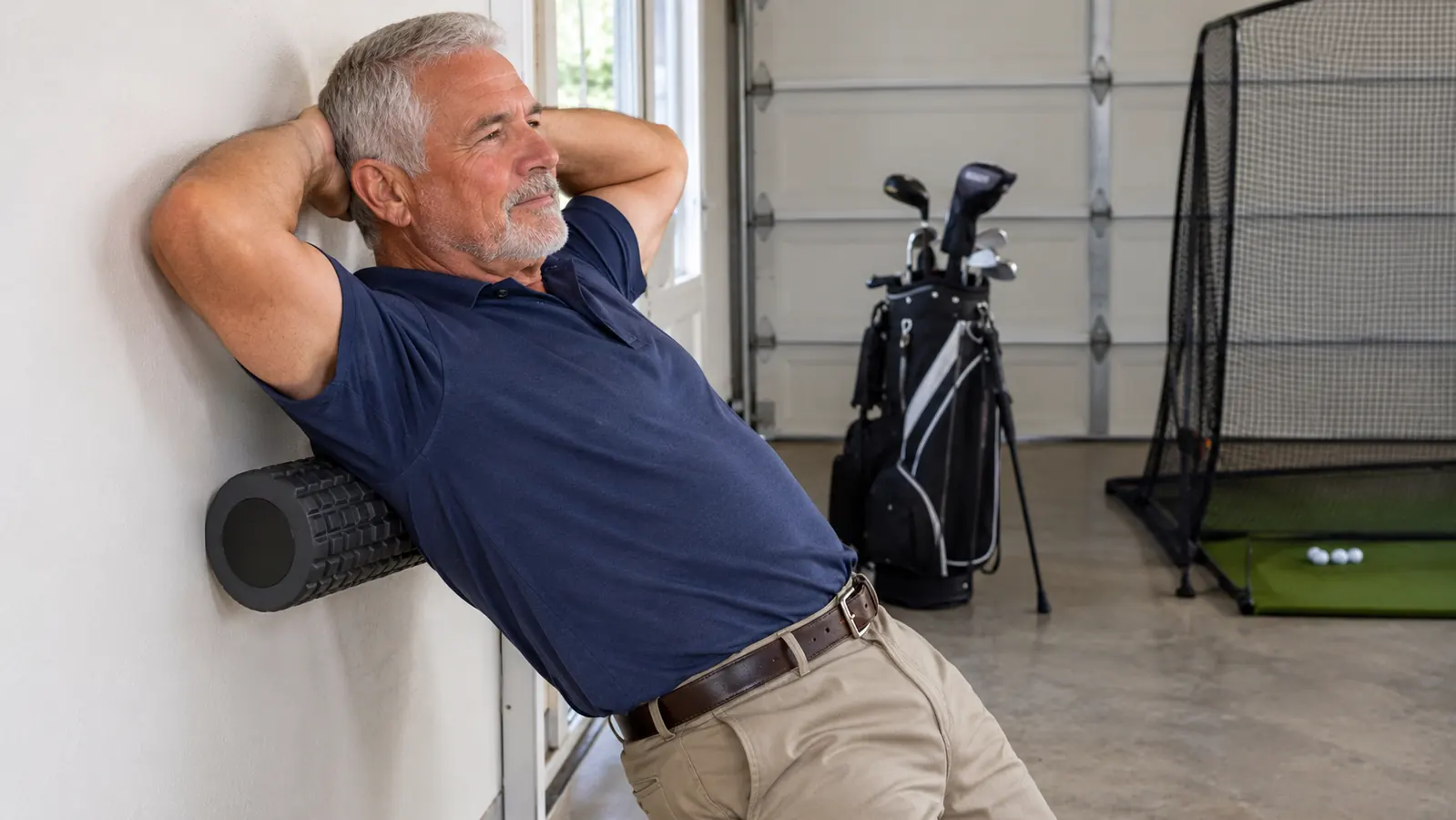
I have also learned where the GRID helps most for golf. My calves take a beating when I walk 9, and rolling them out after a round stops the next-morning tightness. My glutes get tight from riding 18 in a cart, which sounds backwards but is true, all that sitting. And my shoulders, after carrying the bag on a hot Saturday, respond to a slow roll with the GRID against the wall. I lean back into it and work up and down, and it reaches places my hands cannot.
How It Holds Up Over Months
This is the part that surprised me. I expected a foam roller to soften up or start looking tired after a few months. The TriggerPoint GRID has not. The ridges still feel as firm as they did the first week. The foam does not smell, does not peel, and does not leave black marks on the floor. I have dropped it on the garage floor twice, and it did not chip or crack.
The product dimensions are 3.94 x 5.12 x 5.12 inches, and the 13-inch length means it rolls smoothly under my body without wobbling. I have used cheaper rollers that had a slight bend or a soft spot in the middle. This one is consistent from one end to the other.
I have also been harder on it than I planned. One July afternoon I left it in the car for a few hours while I ran errands, and the inside of the car was hot enough to make the steering wheel uncomfortable. I worried the foam would soften or warp. When I brought it inside that evening, it felt exactly the same. I have wiped it down with a damp cloth more times than I can count, and the surface still looks new. The chemical-free foam does not seem to hold sweat or smell, which matters when you use it after a round in the Arizona heat.
The only wear I can find is cosmetic and barely visible. There is a faint scuff on one end from where I dropped it on the garage floor, and that is it. No cracks, no flat spots, no peeling. Ron, the friend who recommended it, told me he had been using his for two years, and that was part of why I trusted him. I half expected to replace this roller within a year, the way I have replaced other foam things around the house. Six months in, I do not see that happening.
After six months, the TriggerPoint GRID still feels as firm as the day I unboxed it, and my Saturday rounds are more comfortable because of it.
What It Does for My Golf
I am not going to tell you a foam roller fixed my swing. I am a 16 handicap, and no piece of foam is going to change that. But it has made a real difference in how I feel on the course. The mornings I roll for ten minutes before a round, I do not spend the first three holes trying to loosen up. I stand up straighter at address, I am not guarding my right side, and I can actually turn through the ball instead of protecting my back.
The other benefit is after the round. I walk 9 and ride 18 most weeks, and my legs used to be fried by Sunday. Now I roll for ten minutes when I get home, and the next morning I can walk down the driveway without grabbing the railing. It is not a cure for anything, and I would never claim it is. It just makes the recovery part of the game a lot more comfortable.
The Saturday round that convinced me was in April. I walked 9 that morning with the group, and by the turn my lower back was talking to me, the familiar dull ache on the right side. I almost skipped the back nine. Instead I finished, drove home, and spent twelve minutes on the GRID before I even took my shoes off. Sunday morning I woke up and walked out to get the paper without thinking about it. That had not happened on a Sunday in a long time. It was not dramatic. There was no moment of being fixed. It was just a quiet morning without the usual stiffness.
The Sunday problem is real, too. I watch NFL games after my round, and three hours on the couch used to turn me into a board. Now I roll during halftime, just five minutes on the floor of the living room, hamstrings and lower back, and I can actually enjoy the second half without shifting around every few minutes. Karen noticed before I said anything. She said I did not groan when I stood up anymore. That is the kind of review that matters more to me than any spec sheet.
Who This Is For
The TriggerPoint GRID is for anyone who wakes up stiff after a round or a long day on their feet. It is especially good for golfers, runners, and people who sit at a desk all day and then try to be active on the weekend. If you have a sore lower back that your doctor has cleared as muscular, the GRID is a practical way to put pressure exactly where you need it.
It is also for people who want a roller that will last. The extra firm surface is not for everyone, but if you have used a soft roller and felt like it did nothing, the TriggerPoint GRID is the upgrade you are looking for.
Who Should Skip It
If you want a soft, gentle roller that feels like a pillow, skip this one. The TriggerPoint GRID is firm, and the first few sessions will be uncomfortable. If you have sharp, radiating, or new pain, do not buy any foam roller until you have talked to your own doctor. I am not a doctor or a physical therapist, and I am not giving medical advice. This is just what worked for me.
I would also skip it if you are looking for a full-length roller for your entire back in one pass. The 13-inch size is great for thighs, hamstrings, and the lower back, but if you want to lie on it lengthwise, you will need a longer roller.
What I Liked
- Multi-density surface feels like a deep tissue massage
- Extra firm but not bruising
- Holds its shape and firmness after months of use
- Light at 1.1 pounds and easy to move around
- Works on the whole body, not just the back
Where It Falls Short
- Extra firm surface is too intense for some people
- 13-inch length is not ideal for full-back rolling
- You have to use it consistently to see the benefit
Give your lower back the same tool I reach for before every league round
The TriggerPoint GRID has earned a permanent spot on my stretching room floor. If you are tired of starting every round stiff, this is the one to try.
Amazon Check Today's Price on Amazon →