

I'll be honest with you. I didn't think a piece of foam was going to do much for my back. I'm 61, I've been an HVAC contractor most of my life, and I've spent plenty of mornings bent over a sink or a furnace feeling like someone tied a knot in my right side. My lower back has been stiff since I was 58, and my doctor called it a muscular strain. No surgery, no disc trouble, just a sore lower back that liked to show up on cold mornings and hang around for the whole round.
So when Ron, a Tuesday league friend, told me to buy a TriggerPoint GRID foam roller, I nodded and changed the subject. Then he described how he uses his on the 14th tee while the group in front of us waits. He said it loosened him up better than anything he'd tried, and that he hadn't skipped a round since. I ordered mine that week.
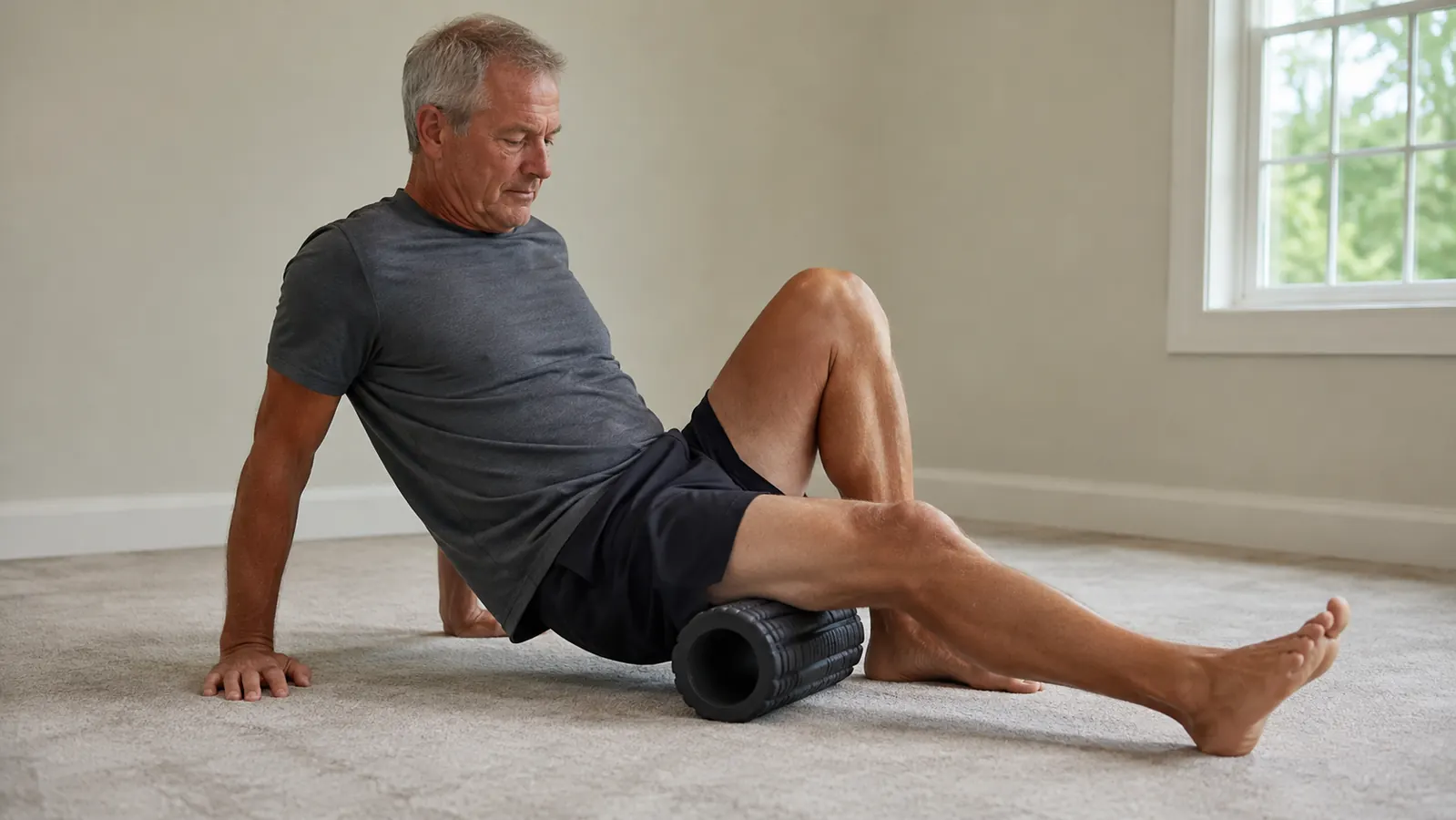
The TriggerPoint GRID is a 13-inch multi-density foam roller with a three-dimensional surface. The pattern of ridges and nodules is supposed to feel like a massage instead of a brick, and the firmness is listed as extra firm. I can tell you this: it feels like a massage, and it is not a brick. It's the only piece of recovery gear I own that I actually look forward to using.
I use it in the spare bedroom we set up for stretching, usually the night before a league round and again on Sunday after I've been sitting on the couch watching football. Ten minutes on the floor, mostly on my lower back and the outside of my hip, and I stand up noticeably looser. It hasn't fixed anything, and I wouldn't claim it has. But it has made rounds more comfortable, and for a 16-handicap who walks nine and rides eighteen most weeks, that's worth a lot.
It hasn't fixed anything, and I wouldn't claim it has. But it has made rounds more comfortable, and for a 16-handicap who walks nine and rides eighteen most weeks, that's worth a lot.
If a 13-inch foam roller can make league rounds more comfortable, it's worth a look
The TriggerPoint GRID is the roller Ron talked me into, and the one that actually earned a permanent spot in my stretching room. Check today's price on Amazon and see if it does the same for your back.
Amazon Check Today's Price on Amazon →The first time I used it, I made the beginner mistake of going straight for the sore spot and pressing down hard. That was too much, too fast. The TriggerPoint GRID is extra firm, and the ridges and nodules mean you don't need to lean in like you're trying to crush a can. I learned to start light, let the roller sink in for a few seconds, and move slowly. Now I spend about ten minutes on it, and I save the deep pressure for the days when I really need it.
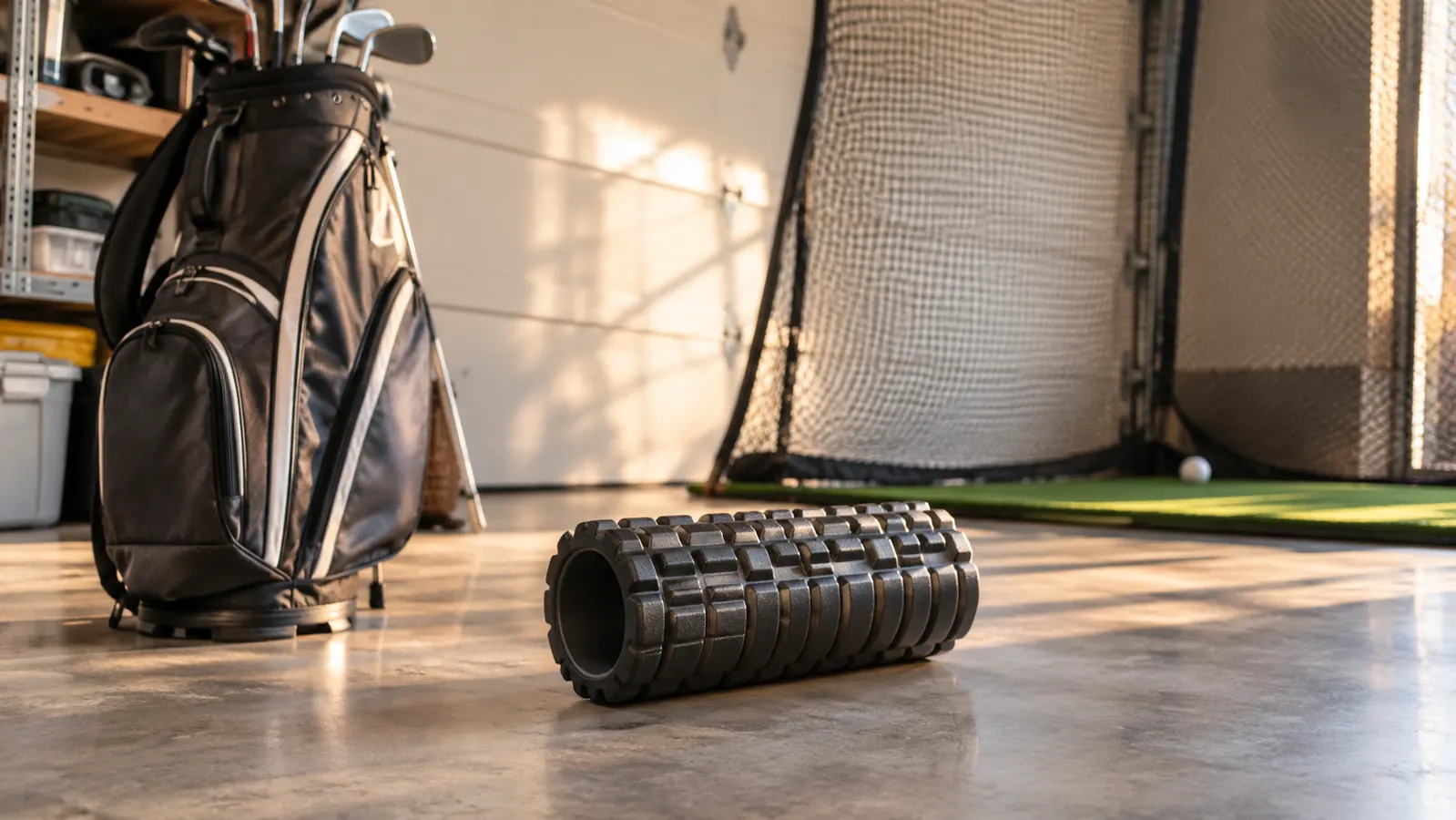
The thing that surprised me most is how often I reach for it. I thought it would be a Sunday-night thing. Instead, it's become part of my Tuesday and Saturday routine, right alongside my stretching. Some weeks I use it in the garage next to the hitting net before I take a few swings. It's light enough to carry with one hand, and at 1.1 pounds it's not something you have to wrestle with. I keep it in the spare room, but I've thought about keeping it in the car for the days when the course is cold and my back tightens up on the first few holes.
Karen, my wife, doesn't golf, but she's used it too. She had a sore lower back after a long day of gardening, and I told her to give it five minutes. She was skeptical, same as me. Then she asked where I got it. That's the closest thing to an endorsement I've seen from her in 38 years of marriage.
I've also learned where it fits best in my week. Tuesday league is the round I used to dread, because my back was stiffest after a day of work and the first tee felt like a coin flip. Now I spend ten minutes on the roller before I head out, and I don't have to think about my back on the first three holes. Saturday is easier, since the week has loosened me up. Sunday is the day I need it most, after the round and then a few hours of football on the couch. Ten minutes on the floor beats a night of shifting around trying to get comfortable.
Now, the honest part. The TriggerPoint GRID is not a cure, and it won't fix a swing. If your back pain is sharp, radiating, or new, go see your doctor first. That's what I did, and it's the right move. What the roller does is help you loosen up before a round and settle down after one. It's a tool, not a treatment.
What I'd Tell You If We Were Sitting at My Kitchen Table
If you were sitting at my kitchen table with a cup of coffee, here's what I'd say. The TriggerPoint GRID foam roller is the piece of recovery gear I'd buy again in a heartbeat. It's simple, it's extra firm, and it does what it says: it helps with tight, sore muscles and makes recovery more comfortable. It's not a cure and I won't pretend it is, but it's a lot cheaper than a round of golf, and it lasts.
I'd also tell you to start slow. Don't buy it and immediately try to roll out every knot you've collected since the Reagan administration. Give your body a few sessions to get used to the ridges and nodules. And if you have a specific health concern, ask your own doctor before you add anything to your routine. That's not a disclaimer, that's just common sense.
The roller Ron talked me into, and the one I'd buy again
If your lower back stiffens up on the course or on the couch, the TriggerPoint GRID is worth trying. Check today's price on Amazon and see if it earns a spot in your routine like it did in mine.
Amazon Check Today's Price on Amazon →