

I'll be honest with you: I bought the Orange Whip because my back hurt and I was tired of sitting out Tuesday league rounds. I'm Gary, 61, retired HVAC contractor in Mesa, Arizona. I carry a 16 handicap, walk 9 and ride 18 most weeks, and I've had a stiff right side of my lower back since a cold-morning round when I was 58. My doctor called it muscular strain, no surgery, no disc injury, but it changed how I practiced. I stopped swinging heavy clubs in the garage because they made things worse. So when I kept seeing the Orange Whip golf swing trainer pop up, I was skeptical. A flexible stick with a weighted end? I figured it was either a gimmick or something that would hurt more than it helped.
That was about six months ago. Since then the Orange Whip has become the one piece of training equipment I actually use every week, and also the one piece I have to warn people about. It helped my tempo more than any lesson I've taken, and it will not fix a bad swing, a weak core, or a back that needs more than a warm-up. Nobody tells you both of those things at the same time. This is the honest version.
The Quick Verdict
The Orange Whip is the best warm-up and tempo tool I own for the money, but it's a training aid, not a cure. Buy it to groove a smoother rhythm and loosen up before rounds, not to fix a broken swing.
Amazon Check Today's Price →Want to feel a smoother swing before your next round?
The Orange Whip is the training aid I reach for first when my back is stiff and my tempo is rushed. It works the golf muscles without loading your spine with heavy weight.
Amazon Check Today's Price on Amazon →How I've Used It
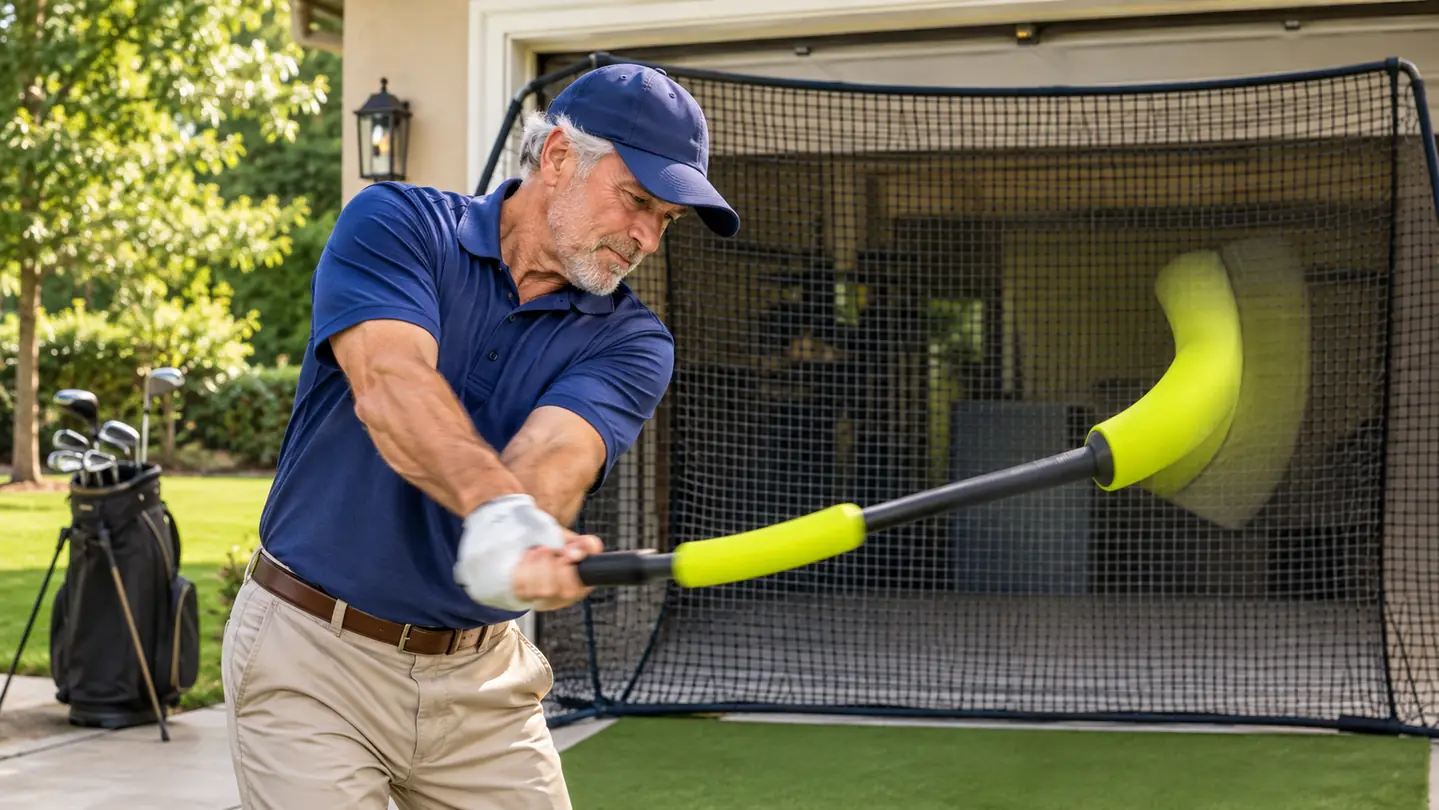
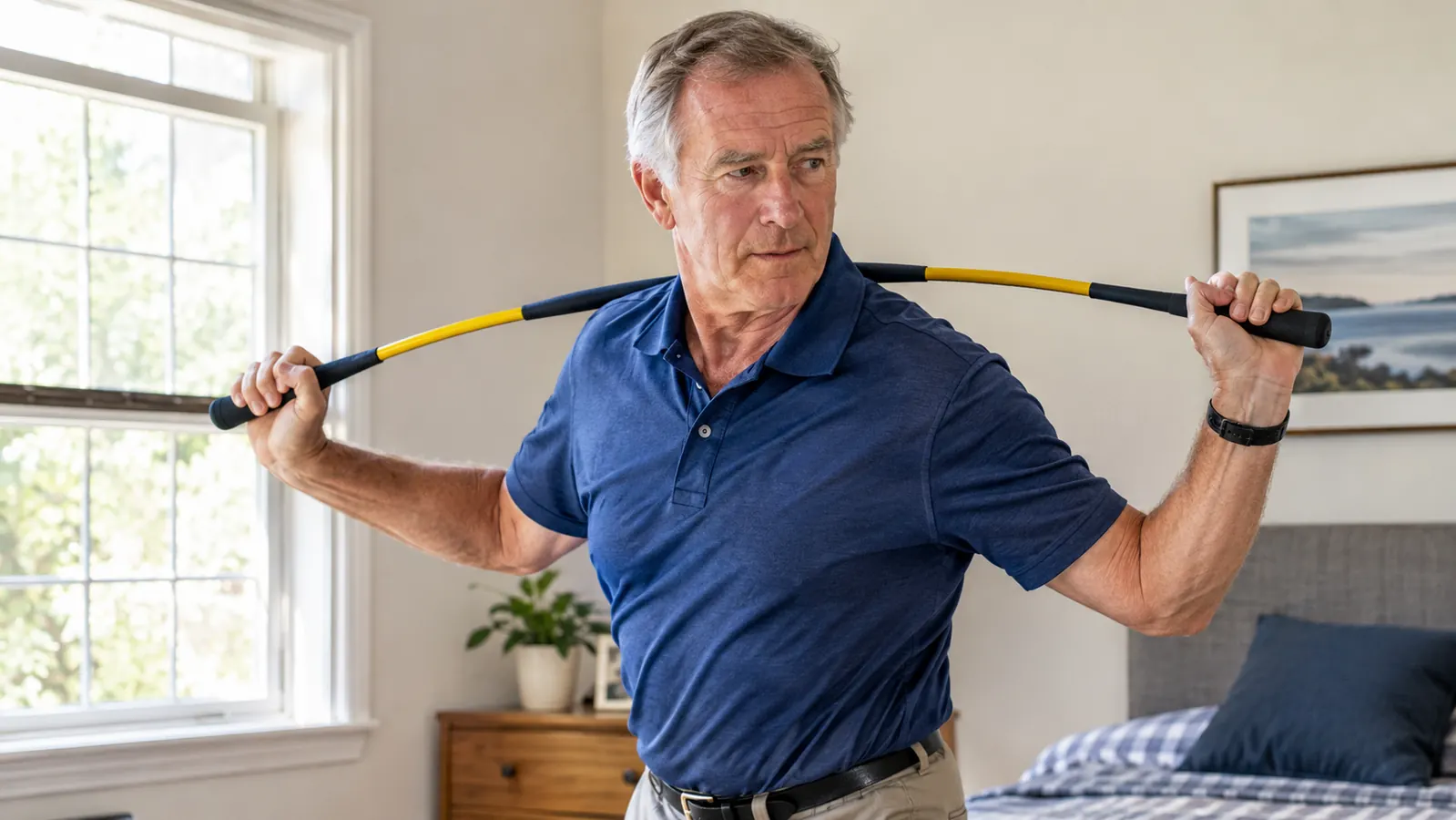
I've used the Orange Whip three ways, and each one came with a different result. First, as a warm-up before a round. I take 10 to 15 swings in the garage or on the first tee area, starting slow and letting the whip load and release. Second, as a practice aid at home in front of the hitting net, where I work on rhythm without a ball. Third, as a stretching tool in my spare bedroom, where I hold it behind my shoulders and rotate gently to loosen my right side. The first Tuesday after it arrived, I nearly gave up on it. I set up in the garage, took my normal driver grip, and swung as hard as I usually do. The shaft bent like a fishing rod and the weighted head slapped the net with a sound like somebody cracking a towel. My first thought was that I'd wasted my money. I tried again, same result. On the third try I slowed way down, maybe half speed, and something different happened. The whip loaded behind me, then released through the hitting area in a way that felt like it was swinging itself. That was the day I learned the first rule of this thing: you have to let it swing you, not the other way around.
The product itself is simple. It's a 47-inch graphite shaft with a weighted end, a synthetic rubber grip, and a flex pattern Orange Whip calls Uniflex. It weighs 1.9 pounds, which is lighter than my driver, and it's ambidextrous, so it doesn't care if you're right- or left-handed. There's no app, no sensor, no screen, no settings to fiddle with. That's part of why I trust it. There's nothing to break and nothing to learn. The grip is a regular men's size in synthetic rubber, and it has held up through six months of garage swings and Arizona summers. The whole thing is 48 inches long in the box, and it stores flat against the wall of my garage next to the net. It's made in the USA, which matters to me, and the listing says it's patented, which explains why there are so many cheaper lookalikes out there. I bought one of those lookalikes two years ago, a knockoff with a stiffer shaft and a heavier head, and it sat in the corner after a week. The Orange Whip gets picked up because it feels good in your hands and because the feedback is honest.
The honest part: the first time I swung it, I felt like an idiot. The shaft bends and whips, and my timing was awful. I was trying to swing it like a club, and that's wrong. The Orange Whip teaches you to let the club load and release, which means your hands lead and the head lags. Once I stopped forcing it, the rhythm clicked. That was the moment I understood what the reviews meant by tempo. My wife Karen watched me from the kitchen doorway that first week and asked if I was okay. I told her it was golf practice, and she nodded the way you nod at something you don't quite believe. A month later she saw me use it before a Saturday round and said, 'That thing actually does something, doesn't it?' It does. But it took me about a week of daily swings to stop fighting it, and I want to be straight about that, because most people will try it once, feel clumsy, and put it down.
What Nobody Tells You Before You Buy
Here's what I wish someone had told me: the Orange Whip will not make you stronger, and it will not fix your slice. What it does is coordinate your arms, upper body, and lower body so the swing happens in the right order. The patented flexible shaft is the whole point. When your tempo is off, you feel it immediately because the whip fights you. When your tempo is right, it feels almost effortless. That feedback is the real product. I still slice my driver maybe one round in three when I get lazy, and the Orange Whip has never once told me why. What it does tell me, on every single swing, is whether my lower body started the downswing or whether my arms jumped in first. That's a specific thing, and it's the thing my tempo needed. But if you're expecting it to straighten out a hook or fix a grip that's been wrong for thirty years, you're going to be disappointed. It's a mirror for your rhythm, not a teacher for your mechanics.
The second thing nobody tells you: it's loud in a garage. The weighted head makes a cracking sound when you swing it properly, and if you have a net close behind you, you'll learn quickly when you're swinging too flat. My neighbor asked if I was chopping wood. That's not a complaint, it's a heads-up. If you practice early in the morning, take it outside. I measured the distance once, just out of curiosity. With the net about six feet behind me, I had to keep my swing path a little steeper than normal or the whip would catch the net on the way through. That turned out to be useful in its own way, because it forced me to swing up instead of around, which is the same move my instructor has been trying to get me to make for years. The sound also tells you when you've got it right. A clean swing makes a single sharp crack. A rushed swing makes a dull thud. You can practice with your eyes closed and still know whether the sequence was right.
The third thing: the 2-year warranty is real, and the company stands behind it. I haven't needed it, but I checked the listing and it's stated plainly. For a training aid that gets swung hard into a net, that matters. I've seen cheaper imitations, and I've owned weighted clubs that rattled apart. The Orange Whip is built to take a beating, and the warranty covers that confidence. One more thing, and this is the one I almost didn't include because it sounds like a sales pitch. It's not. The Orange Whip is the only training aid I've bought in the last five years that I still use after the first month. I've got a weighted donut that slides on my driver, a putting mirror, a grip trainer, and a laser alignment thing that lives in a drawer. The Orange Whip lives by the garage door. That's the real review, right there. Every training aid works for the first week. The question is what's still in your hand in month six, and for me it's this one.
The first time I swung it, I felt like an idiot. The shaft bends and whips, and my timing was awful. That was the moment I understood what the reviews meant by tempo.
How It Changed My Swing Over Six Months
I'm not going to tell you the Orange Whip cut my handicap from 16 to 9. It didn't. What it did was change how my swing feels, and that changed how I practice. Before, I would hit balls in the garage until my back tightened up and I quit. Now I spend 5 minutes with the Orange Whip, then 10 minutes with real clubs, and I stop before I feel the ache. That alone has kept me on the course every Tuesday and Saturday for six months. Let me give you a specific Tuesday. It was the third week of March, and the forecast said 78 degrees, which in Mesa means a perfect morning. I got to the course early, took maybe a dozen Orange Whip swings in the parking lot by the practice green, and then hit my first drive of the day straight down the middle, 245 yards, which is about 15 yards longer than my usual. I don't think the whip added those yards. I think it kept me from starting the round stiff and rushed, which is what used to cost me the first three holes. That's the honest version of the benefit.
The tempo thing is real. My swing used to be all arms, with my lower body arriving late. The Orange Whip punishes that instantly. When my hips lead, the whip loads smoothly and releases with that satisfying crack. When my arms lead, it flops and I feel it in my shoulders. After two months of regular use, that sequence started showing up in my real swing. Not perfectly, but noticeably. My playing partners noticed I was hitting the ball farther with less effort, and one of them asked what I was doing differently. That was Bill, who plays in the Tuesday league with me. He watched me warm up with it one week, then ordered one that same night. Now he uses it before every round, and he's the one who told me to stop swinging it so hard, which was good advice that I should have taken a month earlier. The other thing that changed is my miss. I used to lose shots to the right when I got quick. Those misses are still there, but they're not as far off line, because my arms aren't racing my body anymore. My handicap is still 16, but my bad shots are less bad, and that's a real improvement even if it doesn't show up on a scorecard as a number.
For flexibility, it's been a mixed bag. The Orange Whip helps me loosen up before a round, and I credit it with fewer stiff first holes. But it is not a stretching program. I still do my own lower back stretches in the spare bedroom, and I still get stiff if I sit on the couch all Sunday watching football. The whip is a warm-up and a coordination tool. It's not a substitute for taking care of your body. The Sunday couch thing is real. I watch the early NFL games, and by the fourth quarter my right side is tight enough that getting up to refill my coffee takes a minute. The Orange Whip doesn't fix that, and I'd be lying if I said it did. What it does is give me a quick way to loosen up before I go out and play, so I'm not starting the round already behind. I also use it on Sunday evenings, five slow swings in the garage, just to keep the sequence fresh for Tuesday. That's the routine that works for me. Your mileage may vary, but the point is the same: this is a tool you use, not a magic wand.
Who This Is For
The Orange Whip is for the golfer who already has a decent swing and wants to smooth it out. It's for the player who knows their tempo is rushed, who hits the ball hard but early, who feels like their arms and body are fighting each other. It's for the older golfer who wants to warm up without swinging a heavy club, because 1.9 pounds is easy on the back. It's for the person who will actually use it 5 minutes a day, because that's all it takes to feel the difference. My friend Dave is the perfect example of who should buy one. He's 67, plays twice a month, and his swing has gotten shorter and quicker over the last few years because his back and shoulders don't move the way they used to. I let him borrow mine for a week. He called me on Thursday to ask where I ordered it. He didn't need a lesson, he needed to feel his own rhythm again, and the whip gave him that in about three sessions.
It's also for the golfer who likes feedback. If you want a tool that tells you, every single swing, whether your sequence was right, this is it. You don't need a video camera or a launch monitor. You need to listen to the whip.
Who Should Skip It
Skip the Orange Whip if you're looking for a strength builder. It's 1.9 pounds. It will not build golf muscles the way a weighted club will, and if you want to get stronger, this isn't the tool. Skip it if you expect it to fix a major swing flaw, because it won't. It will show you your tempo problem, but it won't correct your grip, your posture, or your setup. Skip it if you're in sharp pain, because no training aid replaces a doctor's advice. When my back flares up, I don't swing anything, I stretch and call the doctor if it's new or radiating. I'll give you a specific example of the wrong buyer. My neighbor Rick bought one after watching me use mine, then returned it after two weeks. He wanted it to add distance. He swung it as hard as he could, every day, for ten minutes, and when his drives didn't get longer he decided the thing didn't work. He wasn't wrong that it didn't add distance. He was wrong about what it was for. If distance is your goal, buy a heavier club or take a lesson. If rhythm and a gentler warm-up are your goal, this is the one.
And be honest with yourself about whether you'll use it. The Orange Whip works because it's simple and quick, but it only works if you pick it up. If you're the kind of golfer who buys training aids and leaves them in the garage corner, save your money. This one deserves better, and so does your swing.
What I Liked
- Teaches tempo and swing sequence better than any lesson I've taken
- Light at 1.9 pounds, easy on a stiff lower back
- Simple construction, nothing to break or learn
- 2-year warranty from a company that stands behind it
- Quick 5-minute warm-up that actually loosens me up
Where It Falls Short
- Won't build strength, it's a coordination tool
- Loud cracking sound in a garage, not ideal for early mornings
- Doesn't fix swing flaws, only reveals tempo problems
- No app, no sensors, no feedback beyond feel and sound
- Requires daily use to see a real difference
Ready to smooth out your tempo before the next league round?
The Orange Whip is the simplest training aid I own, and the one I actually use. If you want a smoother swing and an easier warm-up, it's worth a look.
Amazon Check Today's Price on Amazon →