
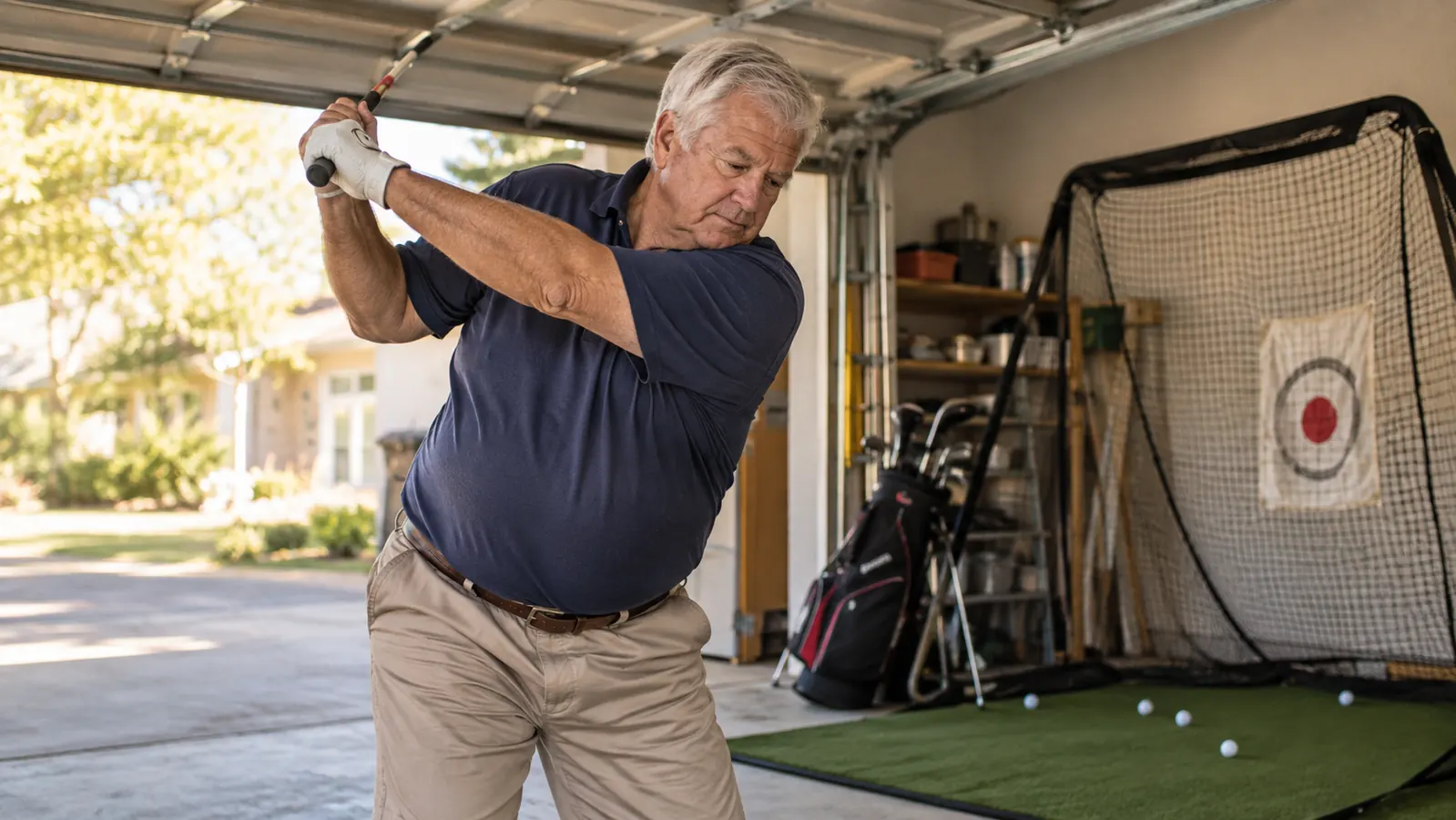
I'll be honest about why I bought a swing trainer: my back made me do it. At 58, after a cold morning round in Mesa, my lower back seized up on the right side. My doctor called it muscular strain, nothing dramatic, just the kind of stiffness that makes you stand up slow and skip the Saturday round you'd been looking forward to. I fought that stiffness for a few seasons before I finally bought the Orange Whip last spring, and it has lived in my garage ever since.
This list isn't about turning you into a single-digit handicap. I'm a 16, I play Tuesday league and Saturday with friends, and I walk 9 and ride 18 most weeks. What I wanted was a way to loosen up before a round and keep my swing from falling apart by the back nine. The Orange Whip does that. Here are the ten reasons I keep reaching for it, and the one honest reason you might not need it.
The swing trainer that earned a permanent spot in my garage
If your lower back is the reason you're reading this, start with ten slow swings before your next round. No range required, no tee time ruined.
Amazon Check Today's Price on Amazon →Loosens a stiff lower back before the first tee
My back is why I bought it, so it's where I'll start. Ten slow swings in the garage, and the right-side stiffness that usually greets me on cold mornings stops being the first thing I think about. I swing it easy, let the weighted head do the work, and by the time I'm done I can bend over and tee up a ball without bracing myself. Karen has watched me do this before every round since. She still rolls her eyes, but she's also the one who reminds me to grab it when I forget.
Builds tempo without you thinking about it
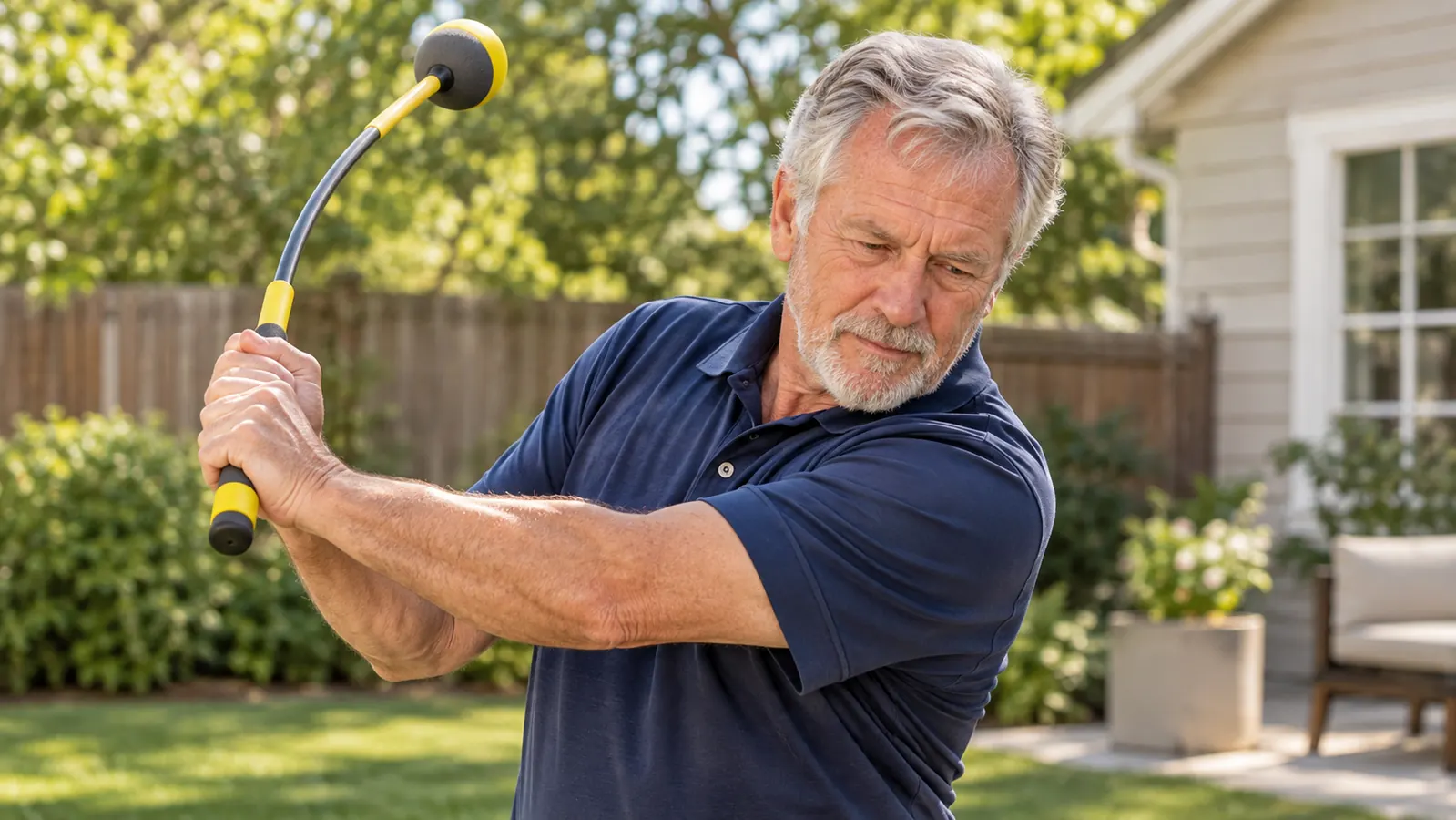
The Orange Whip's flexible shaft is the whole point. The listing says it coordinates the rhythm between your arms, upper body, and lower body, which is a fancy way of saying it forces you to swing smooth. When I rush, I can feel the club lag and wobble. When I let it flow, the swing feels like one continuous motion. My Tuesday league partners have stopped telling me I look like I'm chopping wood, and I consider that progress. Tempo is the hardest thing to teach yourself, because you can't see it in a mirror. You have to feel it, and this is the tool that lets me.
A warm-up that works in the garage
I don't always have time for the range before a 7:30 tee time. The Orange Whip takes up almost no room, weighs 1.9 pounds, and lives next to my hitting net. Two minutes of swings before I leave the house beats standing on the first tee stiff and hoping for the best. On Saturday mornings it's become as routine as filling my water bottle. The trainer is the first thing I reach for because it doesn't need a bucket of balls or a clear schedule.
You feel the swing instead of watching it
I've watched plenty of golf swing videos, and I can tell you exactly what I'm supposed to do. Feeling it is different. The weighted head and the flexible shaft give you feedback you can feel in your hands. When my tempo is off, I know it before the swing is over. No camera, no tripod, no replay. That's the difference between a trainer you use and a video you save for later. A video tells you what a good swing looks like. The Orange Whip tells you what a good swing feels like, and that's the half of the game nobody can teach you from a screen.
Gently stretches the muscles a swing uses
The listing calls it a flexibility trainer, and that's exactly what it does for me. Slow swings stretch the same muscles I use in a real swing, without the jarring impact of hitting balls. On Sundays, when I stiffen up watching football on the couch, I take it into the spare bedroom for a few minutes of easy swings. It's not a stretch routine, and I'm not a physical therapist, but it helps me more than sitting there complaining. My doctor cleared me for it after the strain diagnosis, and I've found that a little movement beats a lot of ibuprofen.
One trainer works for righties and lefties
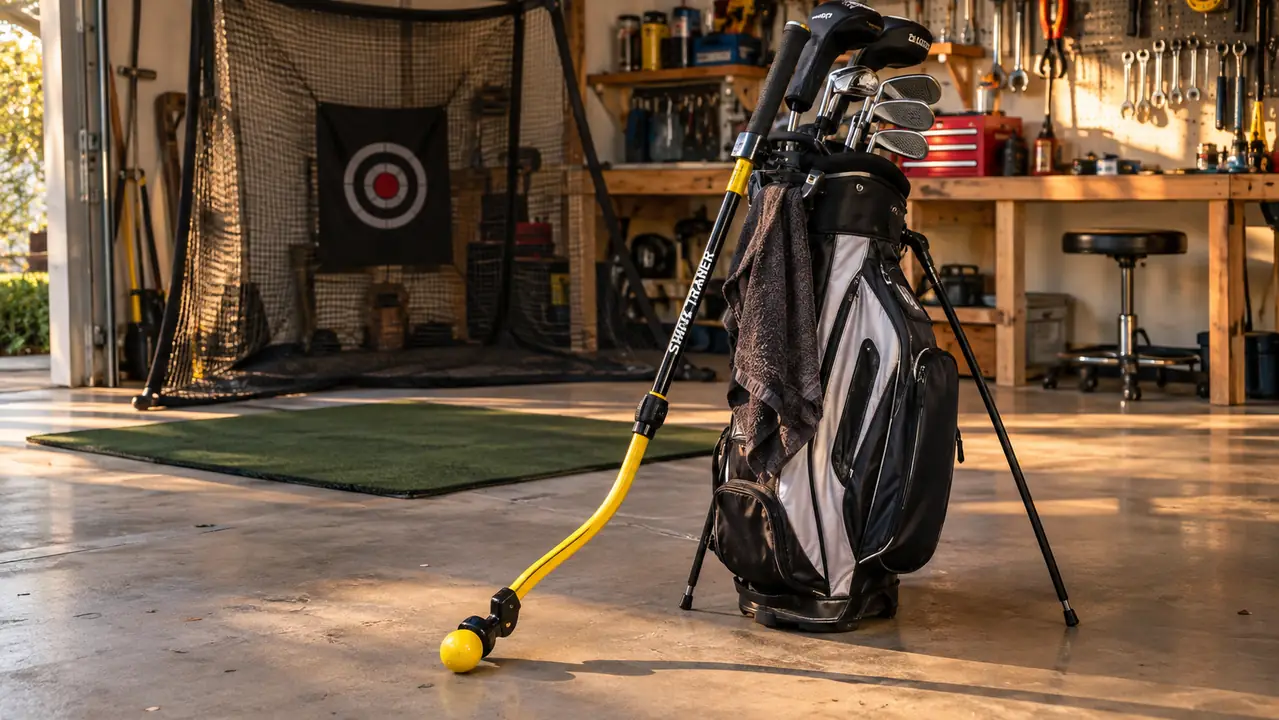
The Orange Whip is ambidextrous, so my buddy Dave, who plays left-handed, picked it up and swung it a few times without changing a thing. If you share a garage with a left-handed golfer, you only need one of these. That's a small thing until you think about buying a second trainer and realize the ambidextrous part means you don't have to. It also means I can hand it to a neighbor without worrying about which side it's set up for.
Light enough to swing indoors
At 1.9 pounds and 47 inches, it's not going to wear you out or take out a ceiling fan. I've swung it in the garage, in the spare bedroom, and in the backyard. The weight is enough to feel the club working, but light enough that I can do ten reps without my back complaining. That matters when you're 61 and your warm-up has to last you 18 holes. I've tried heavier trainers, and they beat me up before the round even started. This one loosens me up instead of wearing me out.
Improves balance through the finish
The first time I swung it, I nearly fell over. The weighted head keeps moving after your body stops, so you learn to stay in your posture and finish in balance. That carries straight into my real swing. I'm not swaying off the ball the way I used to, and my Saturday group has stopped holding their breath when I swing. Balance is one of those things you don't notice until it's gone, and at my age it was going. A few minutes with the trainer a couple of times a week brought it back.
Strengthens the muscles a swing actually uses
It's not a gym workout, and it's not supposed to be. The resistance comes from the flexible shaft and the weighted head, and it builds the golf muscles over time. My Saturday group jokes that I'm 'training,' but the truth is I just swing it a few times a day and my back feels better for it. Consistency beats intensity when you're trying to stay on the course. I'm not going to claim it added distance to my drives, because it didn't. What it did was keep me swinging the same way on the 16th hole as I did on the 2nd.
Built to last, with a 2-year warranty
I've had mine for a while now, and it still swings like the day it arrived. The grip is synthetic rubber, the shaft is graphite, and it's made in the USA with a 2-year warranty. There's a reason I didn't go with an imitation, and it's not a mystery. It's the engineering. This is the trainer I'd buy again, and I don't say that about much of the equipment in my garage. Most training aids end up in a closet by June. This one stays out where I can see it, and that's the real test of whether a product earns its spot.
What I'd Skip
Here's the honest part. If you're expecting a swing trainer to fix a slice or add 30 yards, this isn't that. It won't teach you the mechanics of a better swing, and it won't replace lessons or practice. If your back pain is sharp, radiating, or new, don't buy a trainer. See your doctor first, like I did. And if you're the kind of golfer who won't use something unless a coach is standing over you, save your money. You have to actually pick the thing up.
Ten slow swings before a tee time did more for my back than any warm-up I tried in the two seasons before it.
The training aid I reach for before every round
I bought the Orange Whip last spring, and it's already the first thing I reach for before a round. Check today's price and decide for yourself.
Amazon Check Today's Price on Amazon →